Understanding Your IRS Payment Options
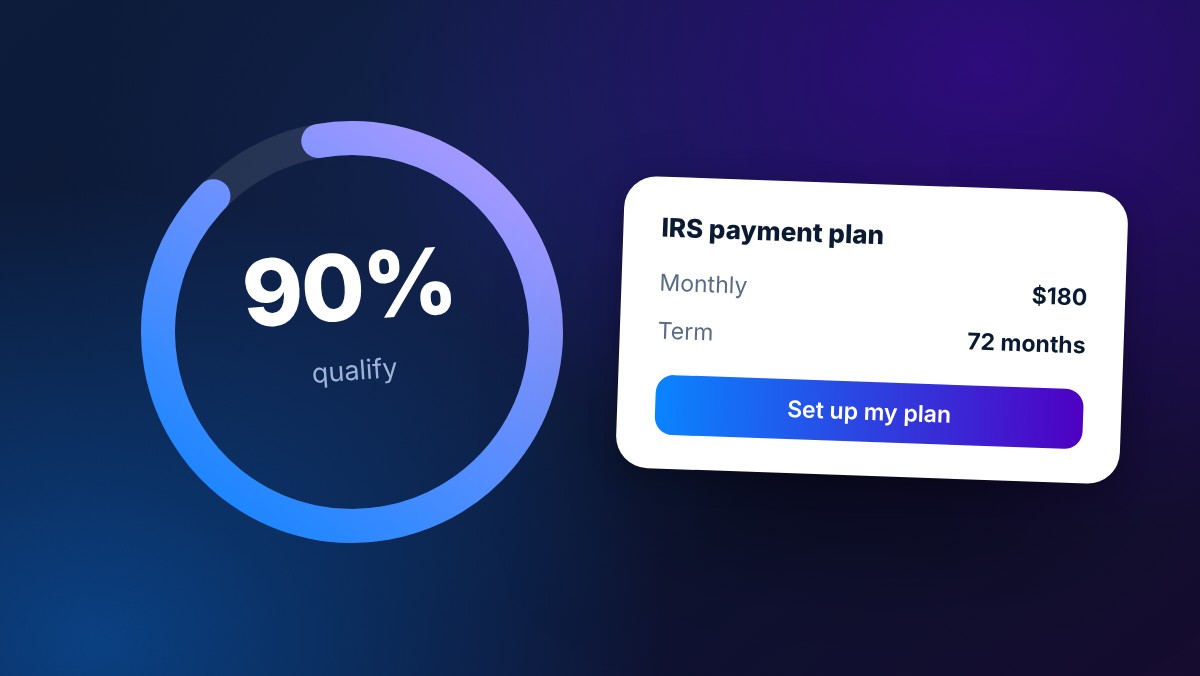
Owing the IRS money is stressful, but it is worth saying plainly: the IRS would rather set up a payment arrangement than chase a balance, and its own data backs that up. More than 90% of individual taxpayers qualify for a simplified payment plan. The real question is not whether you can get an arrangement; it is which one fits, and what each option actually costs.
First, understand what the balance is doing
An unpaid balance accrues two charges simultaneously. The failure-to-pay penalty runs at 0.5% of the unpaid tax per month, capped at 25% of the balance. Interest, set quarterly at the federal short-term rate plus 3 points (roughly 7% annually through 2026), compounds daily from the original due date. Every option below should be judged against that baseline: what does it do to the meters?
Pay in full
If you can pay, pay. Both meters stop, and the matter closes. Even when you cannot pay everything, paying what you can immediately matters more than people realize, because both the penalty and the interest are calculated on the remaining balance. A 40% down payment is a 40% cut to the accrual rate.
Short-term payment plan (up to 180 days)
If you can clear the balance within about 180 days, the short-term plan is the lightest-weight option: no setup fee, no monthly payment schedule, just a commitment date. Penalties and interest continue until paid, but enforced collection generally pauses. This fits the “money is coming, just not yet” situations, a bonus, a house sale, a receivable.
Installment agreement (the workhorse)
The long-term installment agreement is how most balances get resolved. The facts that matter:
- Qualification: individuals owing $50,000 or less in combined tax, penalties, and interest, with all required returns filed, generally qualify without submitting financial statements. This is the streamlined tier, and it is why the 90% figure holds.
- Term: up to 72 months, or the time remaining on the collection statute, whichever is shorter. You choose the monthly amount, subject to the balance actually amortizing.
- Cost: $31 setup with direct debit, around $130 by other methods, and $0 for taxpayers with income under 250% of the federal poverty level. Direct debit is worth it beyond the fee, because agreements fail most often from a missed payment, and autopay is how you not-miss.
- The hidden discount: while an agreement is in effect, the failure-to-pay penalty drops from 0.5% to 0.25% per month. Half the penalty, simply for being on a plan.
- Balances of $50,000 to $100,000 can often still avoid full financial disclosure with a direct-debit agreement; above that, expect Form 433 financial statements and a more negotiated process.
The obligations run both ways: stay current on future filings and payments, because a new unpaid balance next year defaults the agreement.
Currently-not-collectible status
If paying anything would leave you unable to meet basic living expenses, the IRS can mark the account currently not collectible. Collection stops; the debt does not. Penalties and interest continue, the IRS revisits your finances periodically, and refunds get applied to the balance. CNC is genuine relief for genuine hardship, not a resolution strategy, and it typically requires documenting income and expenses.
Offer in compromise
An OIC settles the debt for less than the full amount, and it is the most misunderstood option on the list because it is the most heavily marketed. The IRS accepts an offer when the amount offered equals or exceeds what it could reasonably collect from your assets and future income before the collection statute expires. That calculation, not hardship alone and not negotiation skill, drives acceptance. For taxpayers with equity or steady income, the math usually says no, which is why blanket “settle for pennies on the dollar” promises deserve skepticism. For the cases where the math works, it is a legitimate, life-changing tool. Check the math before paying anyone to pursue one.
What actually determines your options
Three variables do most of the work: how much you owe (the $50,000 and $100,000 lines), whether every required return is filed (an unfiled return blocks nearly everything), and whether you stay current going forward. Everything else, which form, which fee, which term, follows from those three.
Where TaxRock fits
Rocky reads your actual IRS account, tells you what you owe by year, checks what you are likely to qualify for, and when an installment agreement fits, helps you file it for a flat $249, no expensive resolution firm required. Start with the payment plans page to see how it works.